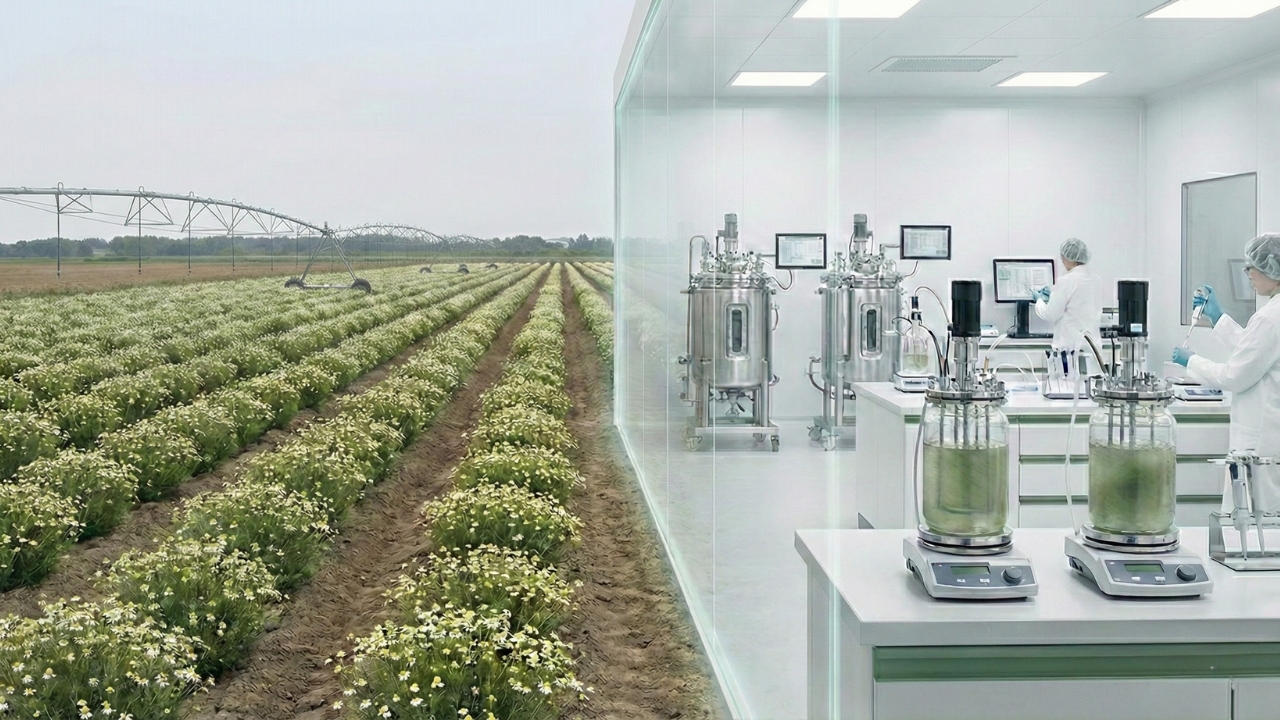
Why Ingredient Quality Fails — And How Plant Cell Culture Fixes It
Ingredient quality, especially for plant-derived food and bioactive ingredients, often fails due to inconsistent potency, variable bioactive profiles, and contamination risks, not because of poor intent, but because traditional supply chains are inherently unstable. Climate change and surging demand have agricultural and botanical supply chains alike. As a result, instability increasingly impedes the production of sustainable, high-quality products.
Even with analytical testing systems in place, protocols can miss adulterants as nefarious suppliers resort to cutting corners. Many studies conducted by the ABC-AHP-NCNPR Botanical Adulterants Prevention Program (BAPP) indicate that significant portions of botanical extracts are “intentionally substituted, diluted, or ‘fortified’ with undisclosed lower-cost ingredients,” leading to widespread quality and authenticity issues.
The root of these problems is systemic. Field-grown botanicals and botanicals alike respond to climate, soil, harvest timing, and post-harvest handling. Even rising atmospheric carbon dioxide levels are negatively impacting nutritional content in crops. As a result, manufacturers struggle to control or reproduce quality at scale.
Demand for reliable ingredients forces the industry to ask: why does agricultural ingredient quality fail, and how can consistency be designed from the start?
What Does “Quality” Mean for Plant-Derived Ingredients?
Quality of plant-derived ingredients is multifaceted, not defined by origin or a single test. True quality includes:
- Consistent bioactive composition. The same levels of key phytochemicals batch after batch.
- Reliable potency. Each batch performs as expected in efficacy tests.
- Absence of contaminants/adulterants. No toxic residues or fraudulent fillers.
- Traceability. Transparent history from seed or cell line to finished ingredient.
- Reproducible performance. Predictable behavior in formulations and the body.
These principles apply broadly across food, beverage, nutraceutical, and functional ingredient applications. In practice, companies often overlook these differences until late-stage testing or even after the consumer buys the product, undermining trust. For example, experts note that simple plant-to-extract ratios don’t fully describe a botanical extract. Factors like raw material quality, extraction solvents, processing temperature, and excipient content critically influence the final phytochemical profile. In short, botanical quality is a system-level outcome rather than a box to check.
Why Quality Fails in Traditional Supply Chains
Agricultural Variability Is the Root Cause
Plants and crops grown outdoors react to every element of their environment. Climate, soil nutrients, altitude, sunlight, atmospheric carbon dioxide, and weather swings directly affect how a plant synthesizes its valuable secondary metabolites. As one review explains, “abiotic environmental stresses can alter plant metabolism, leading to inhibition or promotion of secondary metabolites.” For instance, drought stress dramatically changes medicinal plants’ biochemistry and often reduces key phytochemicals.
Even under normal conditions, year-to-year differences are common. Studies have documented that higher-yield farming methods (e.g. heavy fertilization or irrigation) often deliver lower quality, with lower concentrations of active compounds, than traditional methods. In effect, even genetically identical plants can yield different extract profiles as weather patterns and agronomic practices change.
Unusual climate events now amplify these challenges. Droughts, floods, and heatwaves can decimate harvests or dilute quality. For example, prolonged monsoon rains have made drying of Bacopa monnieri difficult, raising the risk of ochratoxin contamination, a potentially carcinogenic compound in the dried herb. Furthermore, industry case studies (e.g. on ashwagandha and other herbs) show that surging demand and climatic stressors drove farmers to use less-than-ideal plant parts or post-harvest methods, resulting in significantly lower levels of bioactives in recent harvests. These real-world examples illustrate why field-grown ingredients, especially botanicals and specialty crops, often fail to meet consistent specifications.
For another perspective on supply-chain risks, see our blog on The Future of Echinacea: A Trusted Botanical Ingredient for Immune Health, which details how species confusion and adulteration have plagued field-harvested immune-support plants.
Post-Harvest Handling and Processing Add Variability
Quality problems don’t end at harvest, whether the ingredient is a medicinal herb, flavor crop, or functional food input. Drying, storage, extraction, and transport introduce new variances. A slight delay in processing or a change in drying temperature can degrade heat- or light-sensitive compounds. Scientific reviews confirm that processing variables critically influence final extract makeup, for instance, the choice of solvents, extraction time and temperature, and storage conditions all affect potency. In practice, these differences often go unnoticed until late-stage testing or even after the consumer buys the product.
Economic Pressure Increases Adulteration Risk
Supply Constraints Increase Fraud and Substitution
When demand for high-value plant ingredients outstrips supply, especially for species facing regulatory restrictions, economically motivated adulteration becomes a real threat. Examples include: substituting expensive plants with cheaper relatives, spiking extracts with synthetic analogues, or adding undeclared fillers (like excessive maltodextrin) to dilute actives. Research and industry data show this is pervasive: data from the Food Authenticity network found that “botanical origin fraud was the most reported type” of adulteration in 2023, with dilution/substitution close behind. For instance, dilution accounted for about 15% of reported fraud cases for over a decade of 180,000 reports. In other words, nearly all plant-derived ingredient categories are at risk.
Bad actors often choose adulterants that mimic natural profiles, allowing them to slip past basic identity tests. As experts in botanical forensics note, even sophisticated buyers and labs can be deceived unless they use advanced testing, making this a hidden risk for brands, regulators, and consumers alike.
The Hidden Costs of Inconsistent Ingredients
Batch variability and adulteration are not just technical issues, they carry real costs:
- Formulation delays and increased R&D time when ingredient potency fluctuates.
- Failed stability or efficacy studies, forcing repeats.
- Higher testing and quality-control expenses to catch deviations.
- Regulatory headaches or recalls if contamination or mislabeling is discovered.
- Erosion of brand trust if consumers don’t get consistent results.
Over time, these downstream costs easily outweigh any perceived savings from cheaper, uncontrolled sourcing. This is a shift we explore in more detail in our discussion of moving from risky to reliable botanical sourcing.
How Plant Cell Culture Delivers Consistency and Purity by Design
Plant cell culture (PCC) offers a fundamentally different model. Instead of field cultivation, plant cell companies grow plant cells in bioreactors under tightly controlled conditions. Plant cell culture builds quality into the ingredient from the start, because key variables are engineered rather than left to chance. While often discussed in the context of botanicals, PCC is increasingly relevant for food, beverage, and specialty crop ingredients where consistency and traceability matter most.
For a detailed walkthrough of this process, see our introductory blog “What is Plant Cell Cultivation?”. In brief, cells are grown in sterile tanks with defined nutrient media, where temperature, light, pH, and oxygen can be precisely regulated.
Controlled Growth Environments
Plant cell culture systems eliminate the unpredictability of weather, soil pathogens, and field contaminants. By using closed bioreactors, PCC manufacturers avoid risks like heavy-metal contamination or pesticide residues in soil. Plant cell manufacturers standardize and log growth parameters, so each batch experiences the same conditions. The result is far less variability at the source. As industry analysts note, PCC provides “consistent quality and steady supply”, whereas field farming is vulnerable to droughts, pests, and other climate extremes. In practice, growing cells in a clean-room setting greatly reduces opportunities for adulteration or contamination. Inputs (sugars, nutrients, and any elicitors) are fully documented, making the process transparent to regulators and customers.
Consistent Bioactive Profiles
Because the cells grow in a uniform environment, plant cell companies can predict the plant’s metabolic output. Producers can fine-tune the media or add specific precursors (sometimes using insights from genomics and metabolomics) to encourage higher yields of desired phytochemicals. This means PCC batches can achieve highly consistent potency and composition. Experts highlight that PCC can deliver rapid, “consistent, and controlled” production of plant compounds regardless of season or location. For formulators, that translates to fewer surprises, as each shipment contains the same levels of active ingredients, so products perform reliably.
Reduced Adulteration Risk
The closed, traceable nature of PCC dramatically reduces opportunities for fraud. Since the only plant material is the cultured cells themselves, there’s no on-farm mixing or substitute materials. Plant cell companies can screen and record all inputs and validate each step, making it much harder (and uneconomical) for bad actors to tamper with a batch. In effect, the plant material is the same batch-to-batch, and any changes in the final product must come from controlled adjustments, rather than hidden dilution. This built-in transparency helps restore trust throughout the supply chain.
Traditional Agriculture vs Plant Cell Culture: A Side-by-Side Comparison
The differences between traditional sourcing and plant cell culture become clear when viewed side by side.
Table: A comparison of traditional botanical sourcing and plant cell culture shows why plant cell culture delivers superior consistency, purity, traceability, and scalability for bioactive ingredients.
| Attribute | Traditional Botanical Sourcing | Plant Cell Culture |
| Potency consistency | Variable | Highly consistent |
| Climate dependency | High | Minimal |
| Adulteration risk | Moderate to high | Low |
| Contaminant exposure | Possible (soil, fungi, pesticides) | Controlled (clean-room environments) |
| Traceability | Limited (farm to mill) | High (batch-level logging) |
| Scalability | Land- and season-dependent | Modular and scalable |
These differences become even clearer when plant cell culture is compared directly with both traditional agriculture and precision fermentation.
Strengthening Ingredient Quality with AI and Multiomics
Analytical testing amplifies the benefits of PCC, reinforcing the quality-by-design principles of plant cell cultivation. Companies can now use genomics, transcriptomics, and metabolomics data, often powered by machine learning to optimize cultures. For example, sequencing a plant cell culture’s genome and transcriptome helps identify which genes control the production of target compounds. Metabolomic profiling then shows how those genes behave under different growth conditions. By integrating these multiomics datasets, researchers can “select optimal varieties and cell lines” and fine-tune growth media to boost desired bioactives.
In practice, Ayana Bio applies such AI-driven insights to continuously monitor and refine each plant cell batch. Rather than maximizing yield alone, our teams optimize quality attributes like consistent bioactive levels and efficacy markers. This data-rich approach creates a feedback loop: each generation of cells is slightly improved based on the molecular profiles of the last.
For a deep dive into our AI and genomic methods, see our Advancements in Plant Biotechnology with AI blog.
What Formulators and Consumer Brands Should Look for in High-Quality Ingredients
As expectations rise, ingredient buyers must evaluate botanical quality beyond basic identity testing. Key considerations include:
- Defined, repeatable specifications. Are purity and potency parameters clearly stated and met reliably in each batch?
- Advanced analytical transparency. Are comprehensive fingerprints (full phytochemical profiles, contaminant screens) available, not just marker compounds?
- Proven batch-to-batch consistency. Can the supplier demonstrate minimal variability over time?
- Scalable, climate-resilient sourcing. Is the production system able to maintain supply regardless of weather or geopolitical disruption?
In short, quality must be built in at the source. Ingredients should be designed for consistency rather than relying on end-of-pipeline fixes.
The Future of Botanical Quality: From Agriculture to Precision Cultivation
Plant-derived ingredients should be defined by control and data, not chance. As climate volatility and regulatory scrutiny mount, relying on unpredictable agricultural harvests becomes untenable. Plant cell cultivation methods offer a path forward that preserves what makes botanicals valuable (their complex phytochemistry and natural status) while eliminating the uncertainty. Plant cell culture does not replace agriculture; it adds scientific rigor and traceability. In essence, we’re learning from nature’s chemistry and then reproducing it under controlled growth conditions. Plant cell culture allows innovators to say with confidence: this product will always have the same nutrient density profile, always delivering the guaranteed active compounds at the promised levels.
Frequently Asked Questions
Why do botanical ingredients vary so much in potency?
Potency depends on many factors: climate and soil conditions, plant genetics, harvest timing, and processing methods all influence how plants produce secondary metabolites. Even within a single season, drought or excessive rain can swing levels of active compounds dramatically. This natural variability makes it difficult to achieve uniform potency from traditional botanicals grown in fields.
How does botanical adulteration occur?
Adulteration usually follows supply shortages or price spikes. Unscrupulous suppliers may substitute similar-looking plant species, add fillers like starch or maltodextrin, or spike extracts with synthetic analogues. Often these additions mimic the plant’s actives closely, evading detection. Because over 20–30% of herbal ingredients have been found adulterated in lab surveys, buyers and regulators are increasingly vigilant.
How is botanical ingredient quality tested today?
Standard testing includes identity (microscopic or DNA tests), purity (absence of contaminants), and one or two marker compounds (e.g. HPLC for a known active). However, no single test can prove full consistency.
Fraudulent ingredients may slip through identity screens, and marker tests don’t capture the full phytochemical mix. That’s why advanced tools like HPTLC fingerprints, NMR/metabolomics, or genomic barcoding are recommended for ingredients that are on watch-lists, such as those produced by Alkemist Labs.
Can plant cell culture replace traditional botanicals?
Plant cell culture is not about replacing all botanical sources, but about complementing the supply for consistency-critical applications and botanicals that have supply chain issues. Plant cell culture delivers full-spectrum plant compounds like traditional botanicals, but in a controlled way. Precision fermentation utilizes engineered microbes that are excellent at producing single compounds but cannot replicate the full phyto complex found in nature. As one investor notes, plant cell culture can be “bigger than cultivated meat” because it targets high-value, low-volume ingredients like herbal actives. In practice, plant cell culture is especially valuable where batch-to-batch uniformity, purity, and sustainability are top priorities.
Are plant cell culture ingredients considered natural?
Yes. Plant cell culture can use actual plant cells and natural metabolic pathways, without genetic modification. The ingredients are botanically derived and meet many definitions of “natural.” Regulatory stances vary by region, but fundamentally, PCC botanicals can be as natural as any plant-derived extract.
For more on this topic, see our blog “Are Plant Cell Ingredients Natural?”.
Conclusion
For decades, the industry treated botanical variability as an unavoidable fact of life, relying on reactive testing rather than prevention. Plant cell culture flips that model: by growing plant-derived ingredients in controlled labs, quality becomes a design parameter, not a random outcome. Consistency, purity, and traceability are engineered into the process from day one. In time, plant cell culture will reshape how high-value plant-derived ingredients are produced, making reliability as important as efficacy. It aligns with a broader vision of sustainable, science-driven ingredients. For companies like Ayana Bio, our mission is to deliver plant-based ingredients that perform consistently, scale responsibly, and earn trust from day one. As the botanical industry evolves, those will be the benchmarks of true quality.
In the future, ingredient quality will not be something consumer brands test for; it will be something they design.
 BACK
BACK