Plant Cell Culture vs. Cultivated Meat: Which Food Technology Is Making an Impact Today?
Cellular agriculture is shaping the future of sustainable food. While cultivated meat captures headlines, plant cell culture is already transforming how we produce clean, consistent, and sustainable ingredients for foods, supplements, cosmetics, and pharmaceuticals. Moreover, this technology is proving that we can improve nutrition without relying on traditional farming.
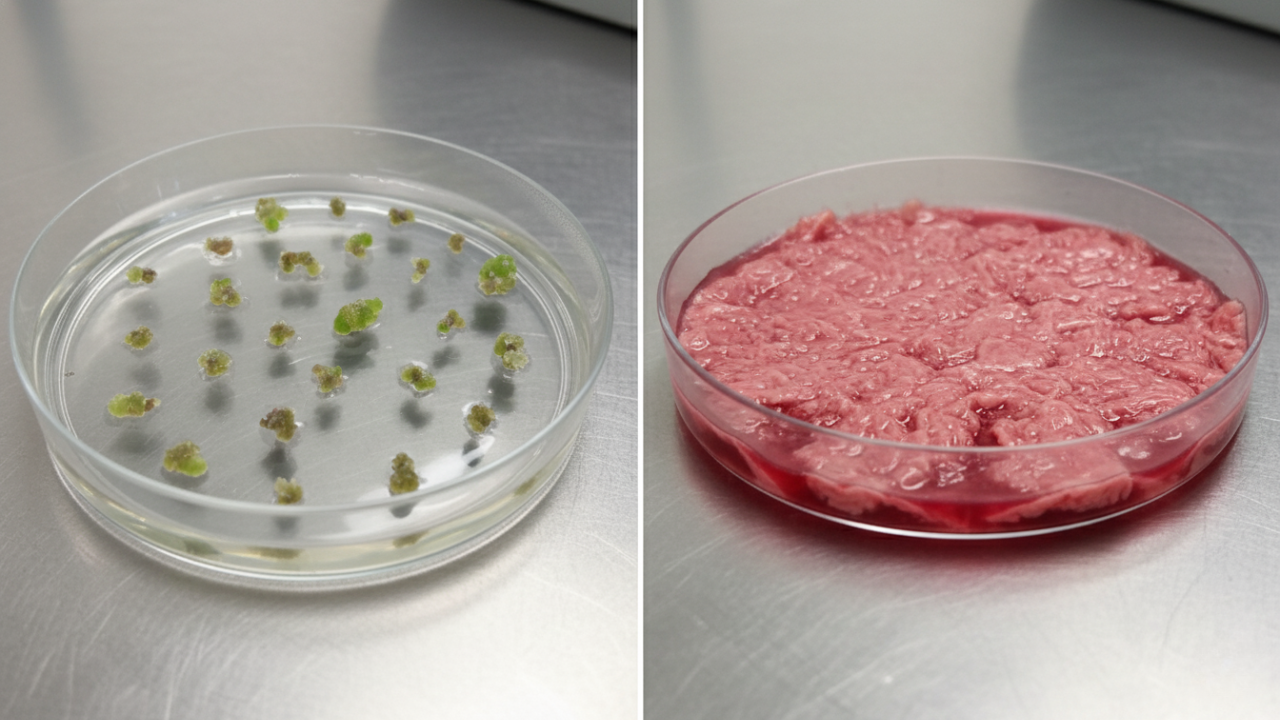
Both approaches grow cells in controlled environments. However, their goals, complexities, and commercialization timelines are very different. Let’s explore how each works, their challenges, and why plant cell culture is delivering results today.
What Is Plant Cell Culture?
Plant cell culture is a biotechnology method that produces plant-based nutrients, bioactives, and flavors directly from cells, without farming or wild harvesting.
How Plant Cell Culture Works
- Researchers take organs (e.g., leaves, roots, or stems) from a plant and place them on a medium with nutrients.
- Next, signaling molecules are added to cause the cells to de-differentiate (i.e., despecialize) and form a callus.
- Afterward, researchers can then place the callus culture in a liquid growth medium to form a suspension culture. Each independent culture (whether callus or suspension) can also be referred to as a cell line.
- Scientists identify the most effective cell lines and growth conditions to produce specific bioactives.
- Once identified, the suspension culture is transferred to a bioreactor, where conditions are optimized in a controlled environment.
- Finally, once the process is optimized, it can be scaled up in large tanks to produce targeted bioactive compounds.
Plant Cell Culture Applications
Today, plant cell culture is already used in:
- Nutraceuticals and supplements
- Functional foods and beverages
- Cosmetics and pharmaceuticals
Benefits of Plant Cell Culture
- Consistent, contaminant-free ingredients that replicate the plant’s full spectrum of phytonutrients.
- Year-round production independent of climate or harvest cycles.
- Lower land and water use compared to traditional farming.
- Reduced supply chain risk from crop failures or market shortages.
Moreover, the process provides reliable access to rare bioactives that are often difficult to obtain through traditional harvesting.
What Is Cultivated Meat?
Cultivated meat (also called cultured or lab-grown meat) grows animal cells in bioreactors to replicate chicken, beef, or fish, without raising livestock.
How Cultivated Meat Works
Scientists begin cultivated meat production by collecting a small sample of animal stem cells from a live biopsy or a cell bank. Then, they place these cells in a nutrient-rich growth medium that provides sugars, proteins, and growth factors. The growth medium helps the cells multiply and differentiate (i.e., specialize) into the types of cells and tissues required in meat (e.g., fat cells, muscle cells, and connective tissue).
- For ground meat products, cells can grow in loose aggregates that are shaped into nuggets or burgers.
- For structured products like chicken, beef, or fish fillets, cells often need a scaffold. This edible 3D framework, made from collagen or plant-derived gels, helps muscle cells align and form fibers.
- In some cases, companies use 3D printing or gentle mechanical stimulation (like mimicking exercise) to give the tissue a firmness and texture similar to traditional meat.
Challenges Facing Cultivated Meat
Despite its potential, cultivated meat faces several major hurdles that continue to limit its scalability.
- High cost: Growth media and growth factors are expensive.
- Scaling up: Animal cells are fragile and difficult to grow at large volumes.
- Texture and structure: Replicating the taste and bite of steak, for example, requires advanced tissue engineering.
- Regulation and acceptance: Cultivated meat is only beginning to receive regulatory approvals, and consumer adoption remains uncertain.
Plant Cell Culture vs. Cultivated Meat
One of the most significant differences lies in what each technology aims to achieve. Unlike cultivated meat, which must replicate the full sensory experience of eating meat, plant cell culture focuses on producing nutritional ingredients such as the bioactives found in blueberries. These ingredients are not meant to replace the whole fruit or herb, but to provide consistent, high-quality nutrients that can be added to foods, supplements, and beverages. As a result, creating nutrients is far less complex than recreating the taste, texture, and structure of meat.
Both plant and animal cell cultivation are forms of cellular agriculture, but they differ in purpose, complexity, and readiness.
| Feature | Plant Cell Culture | Cultivated Meat |
| Goal | Sustainable ingredients (bioactives, nutrients, flavors) | Full meat replacement (food product) |
| Complexity | Simple suspensions of plant cells | Requires scaffolds, multiple cell types, structured tissues |
| Inputs | Sugar-based media, vitamins, minerals | Nutrient-rich media with growth factors (typically from serum and costly) |
| Scale | Already scaled for supplements, foods, cosmetics, pharmaceuticals | Limited pilot-scale production |
| Cost | Competitive for high-value compounds | Still far higher than conventional meat |
| Market readiness | Used commercially today | Early-stage commercialization |
Why Ayana Bio’s Plant Cell Culture Delivers
At Ayana Bio, we specialize in plant cell cultivation for sustainable ingredients. Our Plant Cell Advantage® portfolio therefore offers:
- Full spectrum: complete phytocomplex as found in nature
- Reliable: year-round supply, no crop failures, or variation in bioactives
- Pure and safe: free from pesticides, solvents, & heavy metals
- Fast: production in about 2 weeks
- Non-GMO: no genetic modification by default
- Sustainable: protects biodiversity and avoids over-harvesting
Furthermore, unlike cultivated meat, which is still under development, plant cell culture is a proven technology today. Plant cell culture already reshapes supply chains and meets the demand for sustainable ingredients in supplements, functional foods and beverages, pharmaceuticals, and cosmetics.
The Future of Food Technology with Cellular Agriculture
As the food and nutrition industries evolve, both cultivated meat and plant cell culture hold promise. However, only plant cell culture is delivering scalable, sustainable ingredients right now.
Ayana Bio leads the way by producing clean, consistent, plant-based nutrients that help build a healthier food system, from supplements to functional foods, today.
 BACK
BACK